Sobre Liquid War — an army that follows your cursor
Liquid War — an army that follows your cursor es un juego de Estrategia online y gratuito que funciona directamente en tu navegador. No hay nada que descargar ni cuenta que crear: pulsa Jugar y listo. Funciona en ordenador, portátil, tablet y móvil.
Descripción del juego
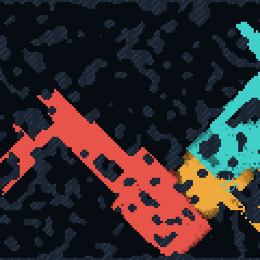
Your army is a few thousand fighters and you command none of them: you move one cursor, and every fighter of your colour floods through the maze along the shortest path to it. When two colours meet nobody dies — the loser changes sides, so the map is a tug of war over one fixed population and every fight you win makes you bigger. Feed a corridor one fighter at a time and you hand it over; pull back until the queue bunches up and arrive all at once, and you take it. Seeded battlefields in six shapes, up to four armies, five opposing temperaments and a twelve-battle ladder that bends one rule at a time.
Cómo se juega
Pulsa el botón Jugar para cargar el juego. La mayoría se juegan con el ratón o tocando la pantalla; los juegos de teclado usan las flechas, WASD o la barra espaciadora. Consulta las instrucciones del juego para ver los controles exactos y usa la pantalla completa para disfrutarlo al máximo.
Preguntas frecuentes
¿Liquid War — an army that follows your cursor es gratis?+
Sí. Liquid War — an army that follows your cursor es totalmente gratis y se juega en el navegador. No necesitas descargar nada ni crear una cuenta.
¿Puedo jugar a Liquid War — an army that follows your cursor en el móvil?+
Sí. Liquid War — an army that follows your cursor funciona en los navegadores móviles modernos de iPhone, iPad y Android, además de en ordenadores Windows, Mac, Linux y Chromebook.
¿Se guarda mi progreso?+
Las puntuaciones y el progreso se guardan localmente en el navegador de este dispositivo. Si borras los datos del navegador, se reiniciarán.
¿Quién creó Liquid War — an army that follows your cursor?+
Liquid War — an army that follows your cursor es un juego de código abierto creado por Tobias Müller (GPTGames) y publicado bajo la licencia MIT.
Créditos
Creado por Tobias Müller (GPTGames). Código abierto bajo la licencia MIT. Código fuente ↗